Island Beat
A nostalgic mixed-reality Experience for Chinese Gen Z that promotes sustainable education on mobile phone recycling
Overview
- May 2025 - August 2025 ( 4 monthes )
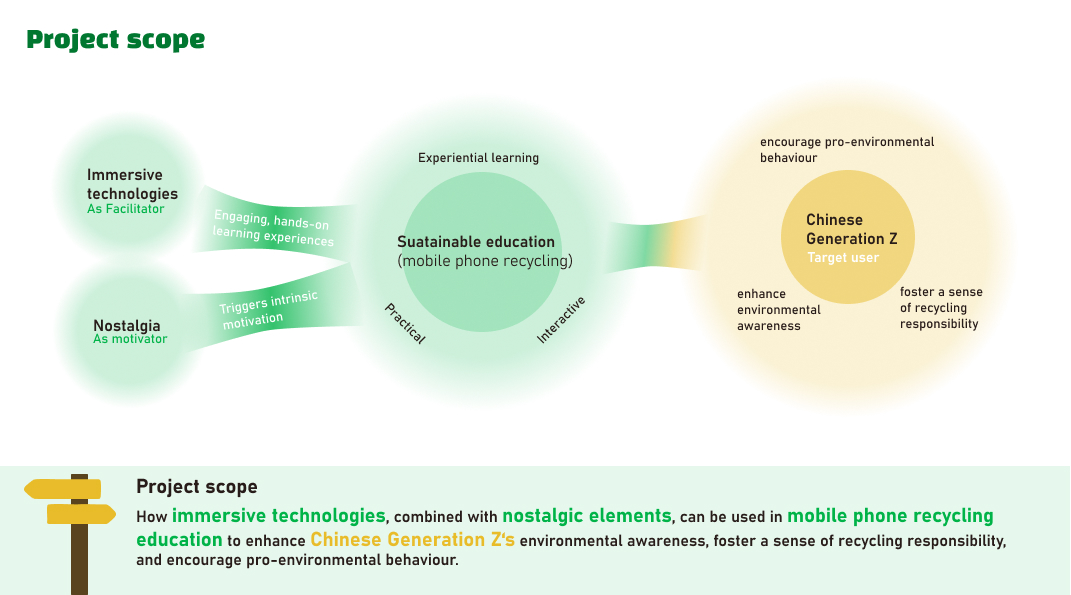
This project explores how immersive technologies and nostalgic elements can enhance mobile phone recycling education for Chinese Generation Z, fostering environmental awareness and pro-environmental behavior through a three-stage mixed reality experience inspired by Pleasant Goat and Big Big Wolf.
Tool
- Meta quest 3
- Unity
- Blender
Background
Need sustainable education about phone recycling on Chinese Gen Z
Today, nearly half of the mobile phones are idle in China, and Generation Z aged 18 to 24 lacks awareness of recycling them (16.29%). Eco environment education has been proven to be a fundamental approach to improve consumers’ attitudes and behaviours.
Research
- Literature Review
- Case study & Questionnaire
Why Phone Recycling Matters
Recycling the metals from phones helps reduce the damage caused by new mining, as recovering copper, gold, silver, platinum, and rare earth elements from phones is twice as efficient as extracting them from natural ores, making it more economically viable (Gómez et al., 2023).
Nostalgia as motivator and immersive technology as facilitator
Immersive technology can fulfil the youth’s expectations for sustainable future education. Gen Z hope that future sustainable education can be practical, experiential and interactive, while Immersive technology can be proven to make abstract concepts tangible and provide an engaging learning experience.
Nostalgia has a positive effect in promoting pro-environmental behaviours. It can awaken intrinsic motivation – a sense of meaning to encourage individuals to recycle more.
Notable features: Nostalgia
In today’s unstable economy, they turn to childhood nostalgia for comfort and happiness – 77% say they love nostalgic things.
Design Concept & Technical Test
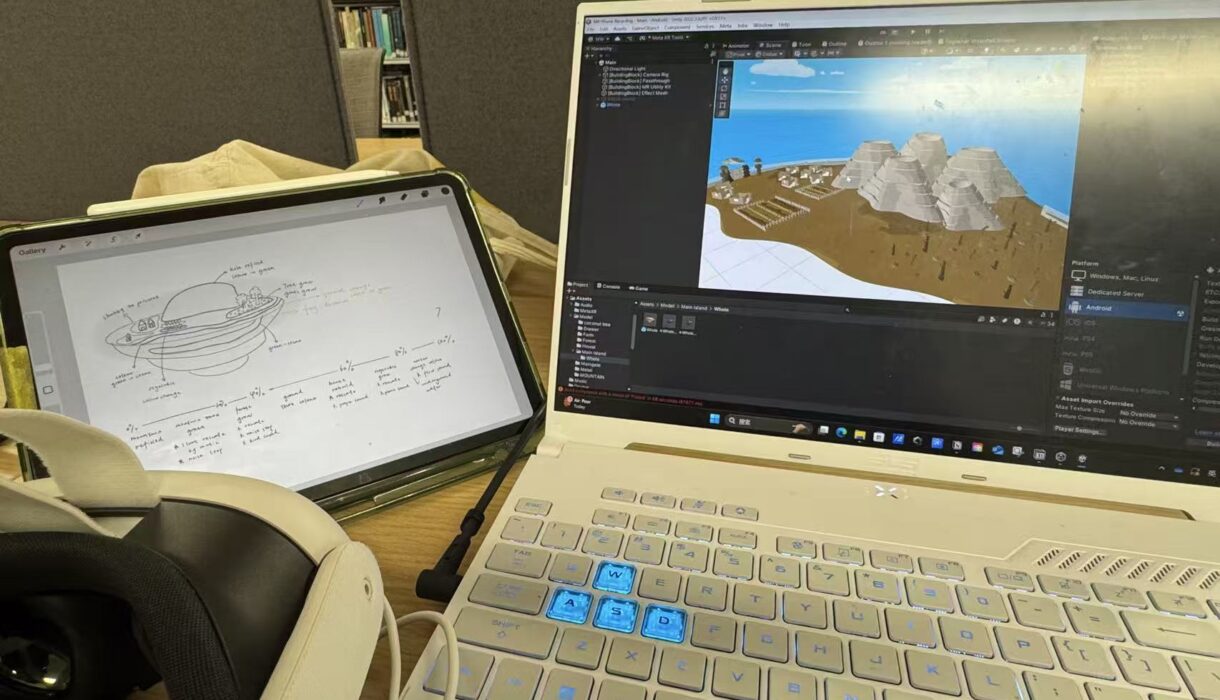
- Brainstorming & StoryBoard
- Interactive prototyping
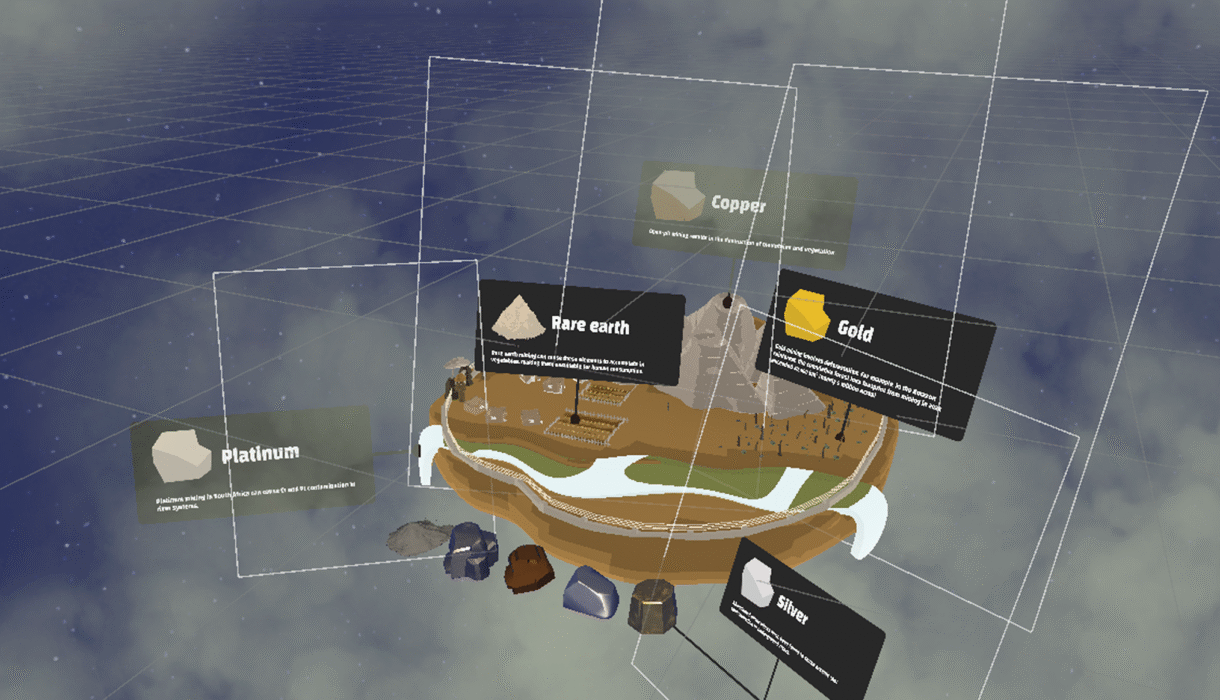
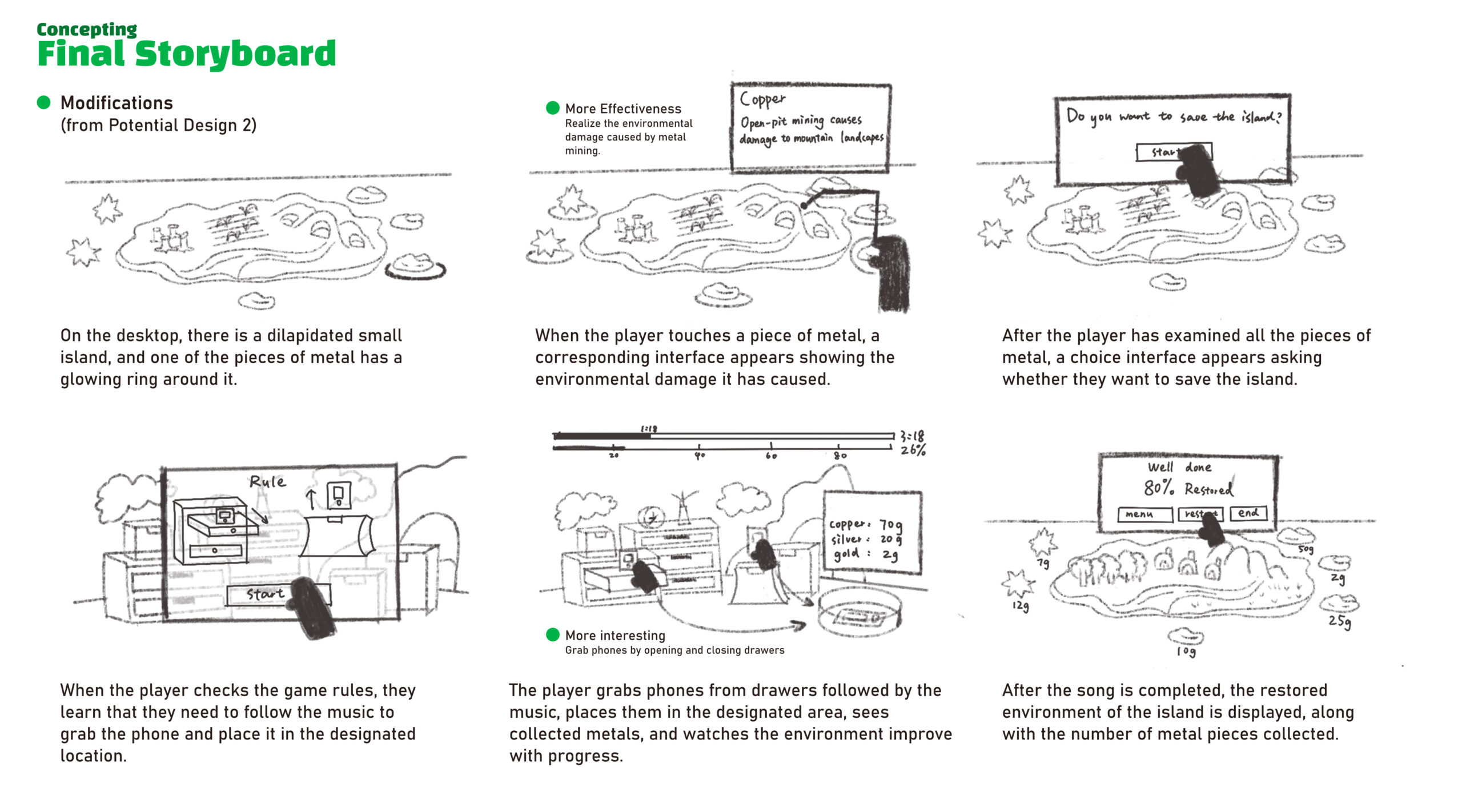
Understand metals and the environmental damage they causez
Various metals are used in phone production, and mining them can cause serious environmental problems. This project aims to convey that the more you recycle, the better the environment becomes, making environmental issues feel closer and more tangible to them.
Catching beats in nostalgic music, changing nostalgic the environment
Inspired by the nostalgic cartoon Pleasant Goat and Big Big Wolf, this project incorporates similar visual elements and a themed song as background music. Idle phones appear from the drawers in sync with the music beats, turning each rhythm into an interactive recycling moment.
Technical Test: Beat Detection and Environmental Changes
Record the timestamps of strong beats in the music, then retrieve them in Unity to trigger corresponding object changes at those moments.
Environmental changes are based on different collection percentages. A global variable monitors the number of collected phones, and different functions call this value to trigger animations that modify the environment accordingly.
Development
- MoodBoard
- Draft
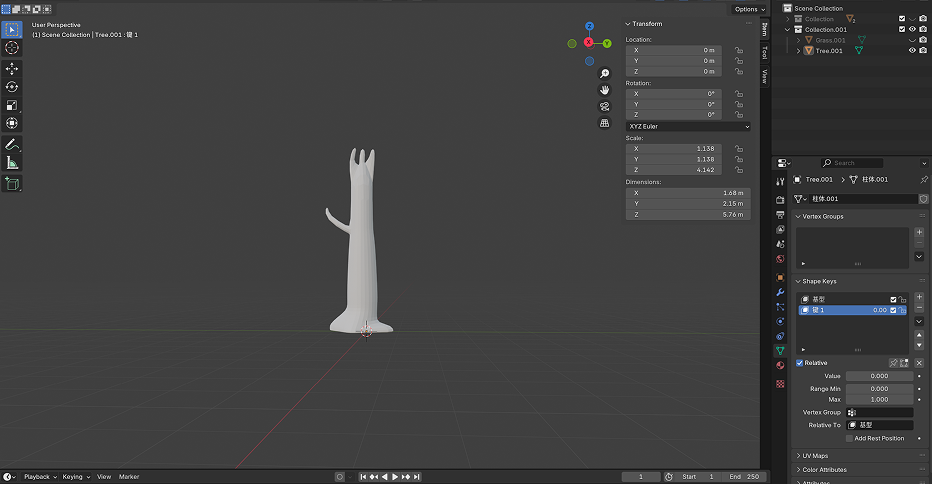
- 3D modeling and animation in Blender
- UI Design
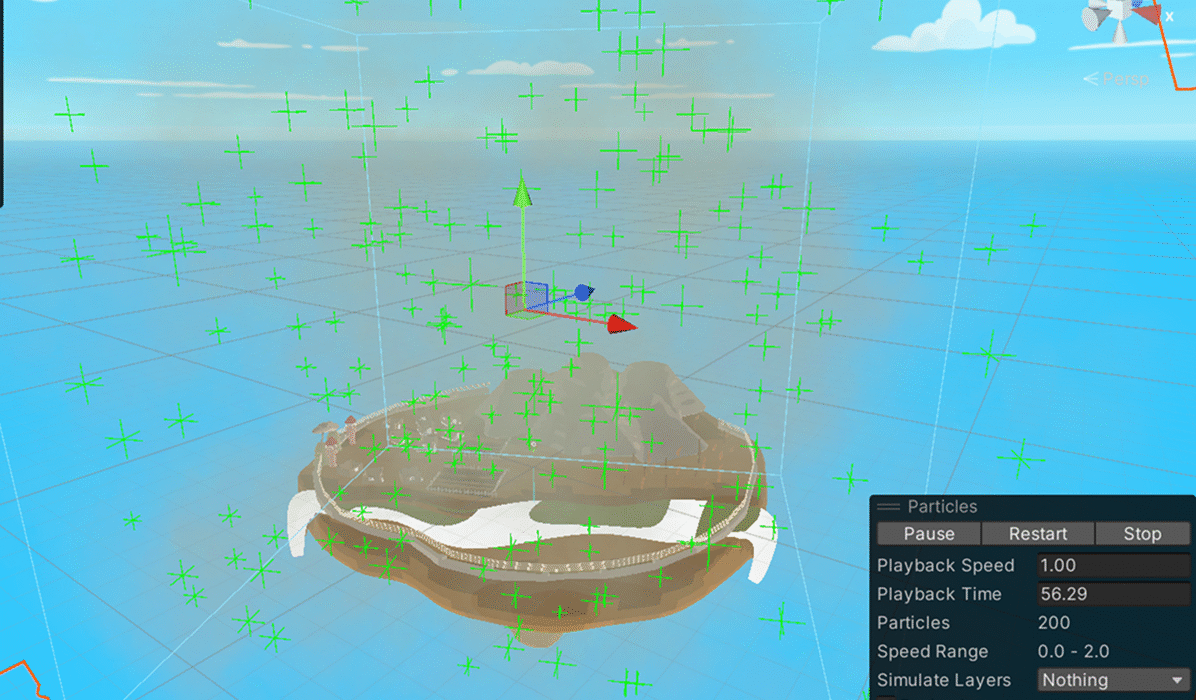
- Shader & particle
- Unity environment setup
- Interactive prototype
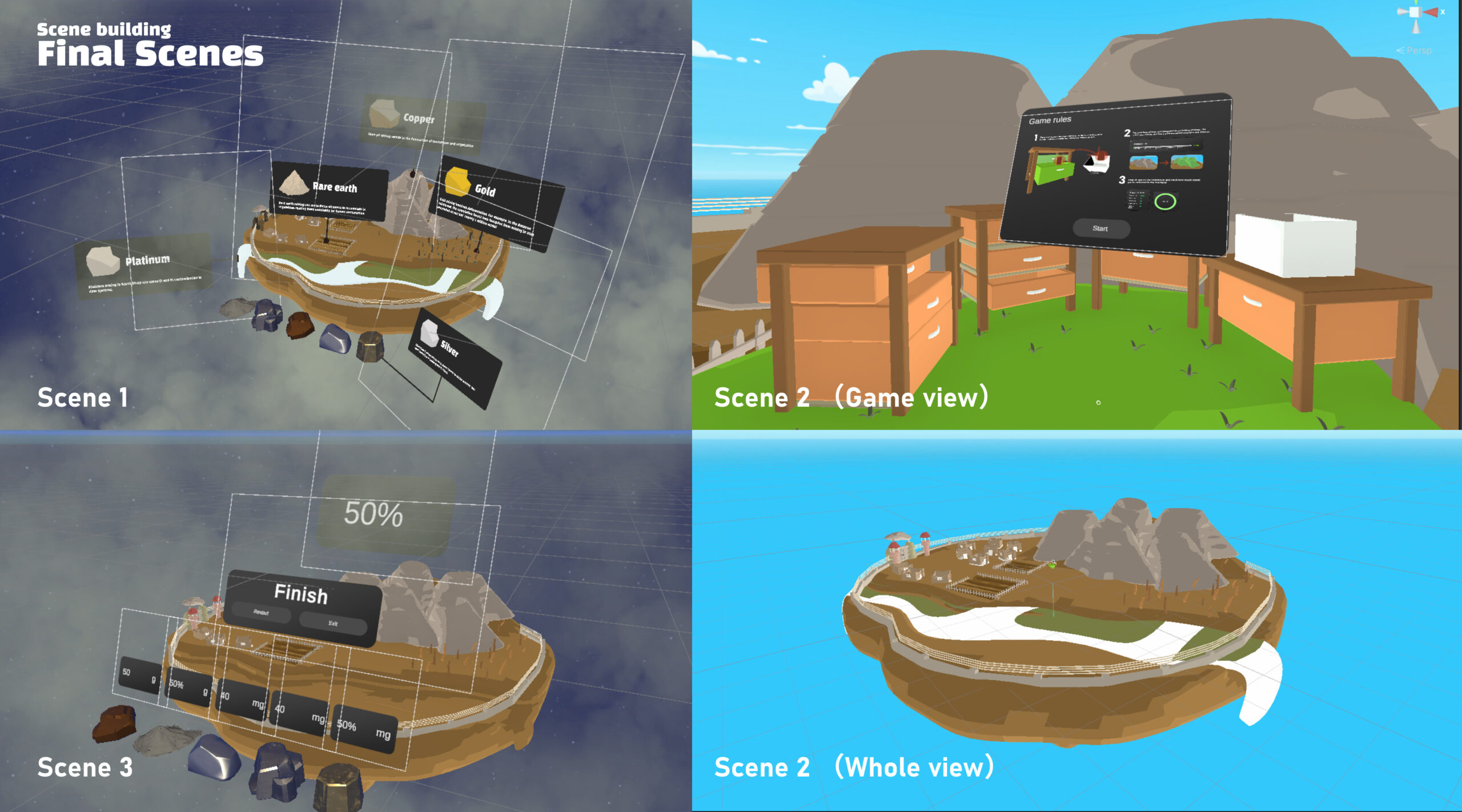
Nostalgic Scene Design Showing Pre- and Post-Destruction Environments Caused by Metal Mining
I incorporated nostalgic cartoon elements and music in scene design in response to the questionnaire results collected from the Chinese Generation Z. To encourage their collection behaviour, I created re- and Post-Destruction Environments Caused by Metal Mining. For example, Mining silver can contaminate underground rivers.
Understanding the Environmental Damage Caused by Metal Mining
Players learn about the environmental damage caused by metal extraction as they grab each metal in front of them. The UI panels then appear above the polluted area on the island, connecting their Collecting Behaviour to Environmental Protection.
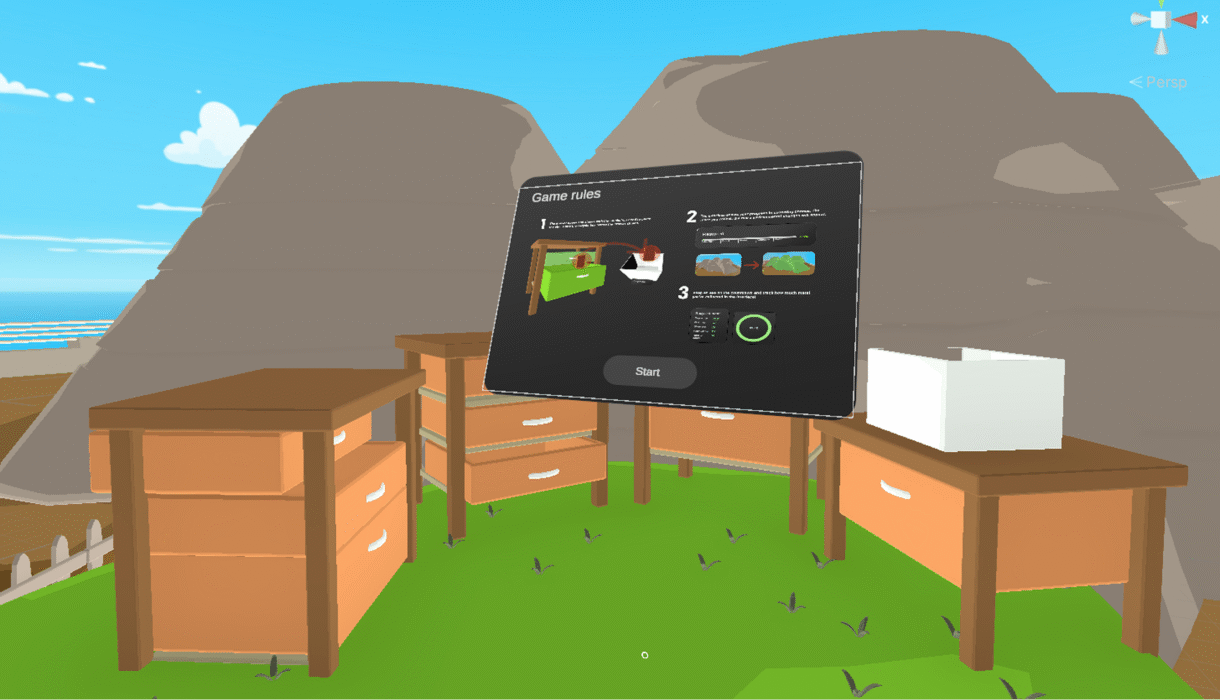
The idle phones hidden in drawers appear as beats in rhythm with nostalgic background music.
Generation Z has some environmental awareness, so they tend to keep old devices rather than throw them away. However, they are not aware that keeping these idle phones in their drawers can also harm the environment. Catching the phones while following the nostalgic music evokes an inner sense of meaning toward recycling.
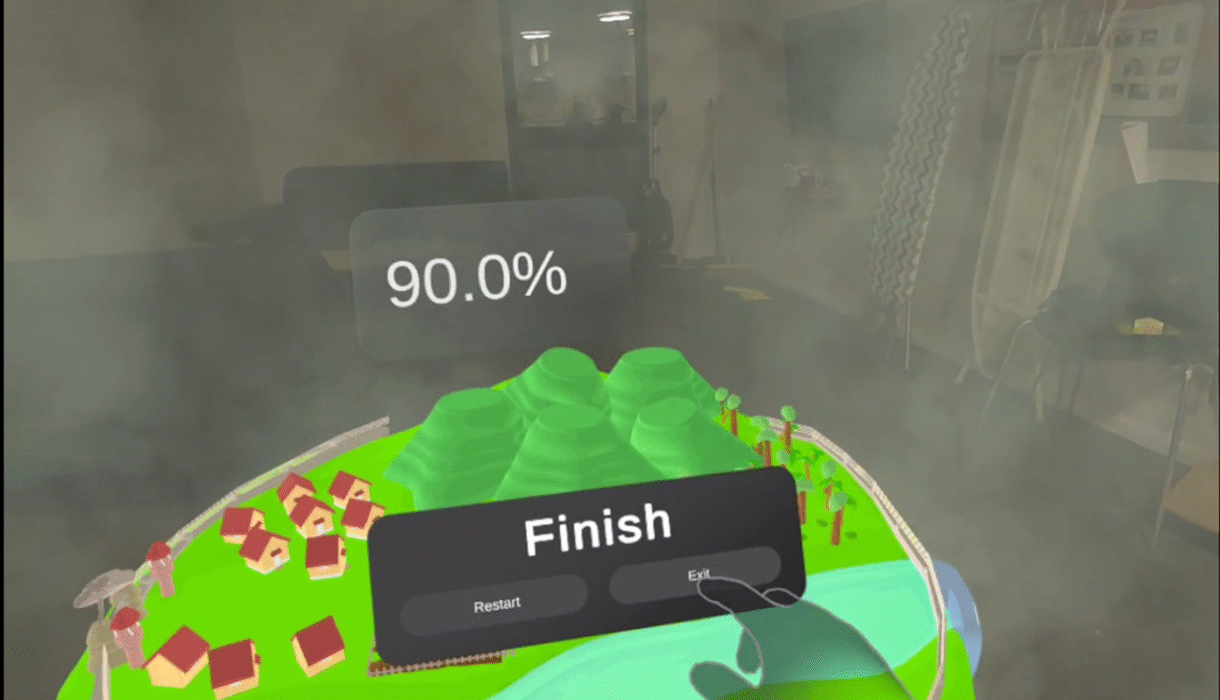
Linking the Amount Collected to the Degree of Environmental Restoration
When players collect more idle phones, the environment polluted by extracted metals will recover. The more collections, the more area will recover, connecting their collecting behaviour to environmental protection
Evaluation & Iteration
- On-site Test
- Questionnaire Feedback
- Iteration
84% players feel it is an immersive and appealing experience, increasing their pro-environmental intension
I referred to the SUS (Slater-Usoh-Steed Presence) questionnaire, as well as the Construction and Evaluation of a User Experience Questionnaire, to design the user test questionnaire (Oiknine; Laugwitz et al., 2008).
Found out that Users can focus on the experience and feel encouraged and pleasantly surprised, and it is a very novel and innovative experience. The areas for improvement are that users felt the sense of realism was limited, the interactions required too much effort to achieve the goals, and the awareness-raising aspect was not sufficient.
The most memorable aspect is that grabbing along with the music causes the environment to change accordingly.
Iteration: Add more UI Guidances and duraion of beats appearing
Feedback mainly focused on not knowing the next steps and the beat duration being too fast. I added more UI panel guidance for each action and increased the interval between each beat from 2 seconds to 4 seconds.
Reflection & Future Plan
This is the first time I have worked on an MR project as my final project in my Master’s program. I have been really interested in how nostalgia can be incorporated into immersive experience design, when I saw a nostalgic video showing familiar scenes of a generation’s childhood. After that, I found that nostalgia can bring individuals closer to climate change by shortening mental distance and the emerging problem of idle smartphones. This is what inspired this project.
- Improve literature review Process
At the beginning, I went in the wrong direction when conducting my literature review, where I focused too much on verifying how nostalgia could support mobile phone recycling from a psychological perspective instead of considering it from the viewpoint of immersive experiences or behaviour change. After discussing with my tutor and asking my classmates about their methods for structuring papers and conducting research, I revised the objectives and aims of my project and listed the steps with the related keywords. For each step, I listed the specific research questions I needed to investigate, and then arranged the related papers chronologically. After that, I summarised my own understanding. Over time, I developed a literature review method that aligns with my way of thinking and allows my ideas to be better supported by evidence.
- Understanding the Importance of Early Feasibility Testing
Thinking through the design solutions was the most challenging part for me. I was able to establish a general direction from brainstorming, but I spent a great amount of time on one design concept that eventually turned out to be technically unfeasible at my current skill level. I learned that testing technical feasibility early in the design process is essential, as it forms the foundation of the entire interactive experience.
I also learned that a prototyping method from another designer’s project. Testing the interactive experience in Unity rather than on paper in a low-fidelity way to ensure that the design meets user needs and maintains efficiency.
- The Value of Low-Fidelity Prototyping in Unity
Thinking through the design solutions was the most challenging part for me. I was able to establish a general direction from brainstorming, but I spent a great amount of time on one design concept that eventually turned out to be technically unfeasible at my current skill level. I learned that testing technical feasibility early in the design process is essential, as it forms the foundation of the entire interactive experience.
I also learned that a prototyping method from another designer’s project. Testing the interactive experience in Unity rather than on paper in a low-fidelity way to ensure that the design meets user needs and maintains efficiency.
For the results of the user test, when a participant mentioned that the experience felt like “meeting an old friend”, I felt it demonstrated how nostalgia had been effectively embodied within the experience design.
I hope to continue exploring emotional design in immersive experiences, especially how nostalgia can create powerful intrinsic motivation. I also aim to investigate how immersive technologies can enhance learning experiences.